
How to Understand & Interpret Render Revisions — A Complete Client Guide
Introduction
3D architectural rendering is the foundation of modern design communication. It allows clients to visualize spaces before construction begins, reducing uncertainty and increasing confidence in design decisions. However, one area that often feels confusing is the revision process. Understanding how to interpret render revisions empowers clients to collaborate more effectively with designers and achieve better outcomes.
When you work with an architecture studio, a visualisation agency, or even search for 3D designers near me, revisions are a normal and valuable part of the journey. They are not mistakes but improvements that refine the final result.
Why Render Revisions Are a Positive Part of the Process
Revisions exist to align the visual output with your expectations. In architectural visualization 3D, each update brings the render closer to realism and functionality. Instead of seeing revisions as delays, view them as checkpoints that protect your investment.
Professional studios structure revisions carefully, allowing clients to focus on the right details at the right time. This structured approach is especially important when visuals will later be used for marketing, presentations, or websites built through WordPress development.
Understanding the First Draft in 3D Architectural Rendering
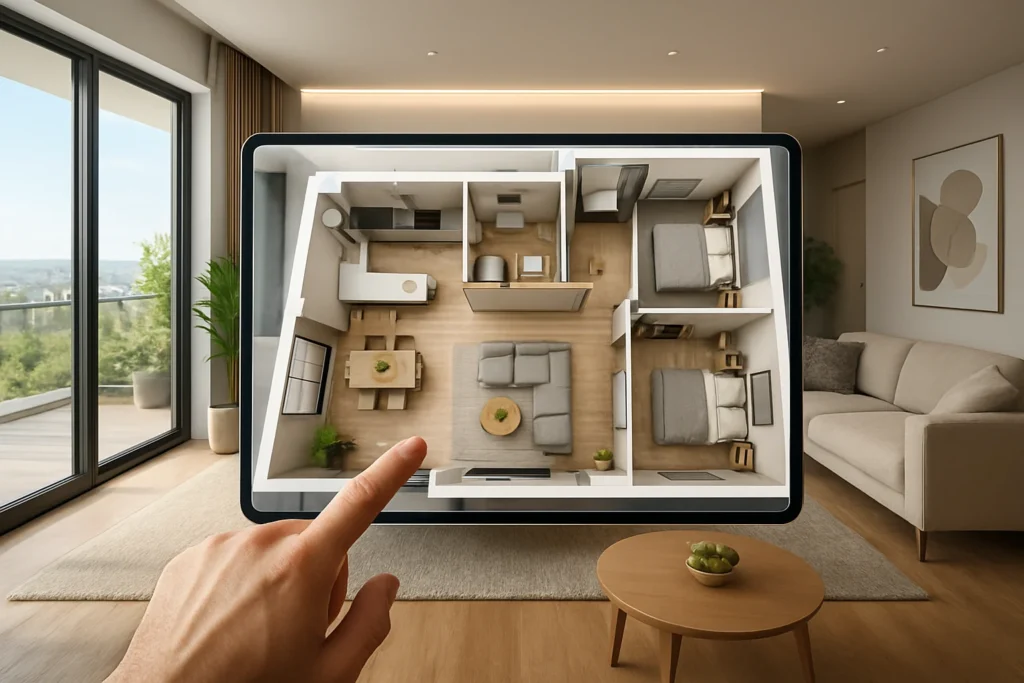
The first draft of a 3D architectural rendering focuses on structure rather than beauty. At this stage, the goal is to confirm layout, proportions, and spatial balance. Colors, lighting, and textures are usually minimal or temporary.
Clients often worry when the first render looks plain, but this is completely normal. Early drafts often raise important considerations for the client. At this stage, the render helps you understand whether the space feels correctly proportioned, whether the layout is practical and balanced, and whether room connections are clear and logical. Making structural changes during this phase is ideal because it prevents costly adjustments later in the process.
Materials, Textures, and Visual Mood Development
Once the structure is approved, the project moves into material and texture development. This phase of architectural visualization 3D introduces flooring, wall finishes, furniture materials, and overall atmosphere.
This is where clients should provide detailed feedback. Instead of general comments, reference real materials or inspiration images. Many clients working with 3D designers near me find that visual references speed up revisions significantly.
If your project involves branding or digital marketing, internal references such as a brand guideline page or a previously completed project page can be extremely helpful.
Lighting Revisions: From Approximate to Realistic
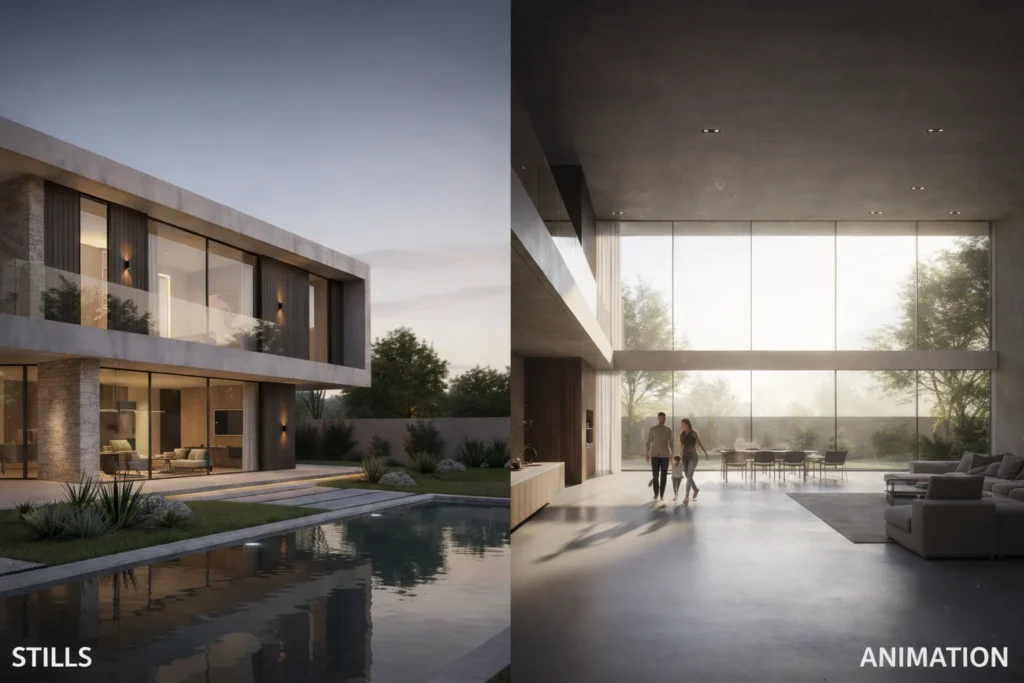
Lighting plays a powerful role in 3D architectural rendering. Early lighting setups are usually placeholders, designed only to show form and depth. As revisions progress, lighting becomes more refined and realistic.
Clients reviewing architectural visualization 3D should consider how lighting affects mood and usability. Warm lighting often creates a welcoming and comfortable feeling, while cooler lighting supports a modern and professional atmosphere. Mentioning these preferences early allows the visualization team to refine the lighting before final rendering.
Since lighting strongly influences how materials appear, reviewing both elements together usually produces more cohesive and realistic results.
Camera Angles and Visual Composition
Camera angles determine how a space is perceived. A render may feel unfamiliar simply because the viewpoint is different from what you imagined. Studios specializing in 3D architectural rendering often choose angles that emphasize depth and openness.
If the view does not match your vision, requesting alternative angles is completely acceptable. This is particularly important for projects intended for online use, such as property listings or WordPress websites.
You can also request a combination of wide shots and detail shots to fully understand the space.
Realism, Quality, and Preview Renders
Clients sometimes worry about image quality during revisions. Preview renders in architectural visualization 3D are intentionally lower quality to allow faster updates. Slight grain or noise is normal at this stage.
The final 3D architectural rendering is produced only after approval and is rendered at high resolution. If quality seems unclear, ask whether the image is a draft or final version.
Trusting this process helps maintain efficiency without sacrificing quality.
Giving Clear and Effective Feedback
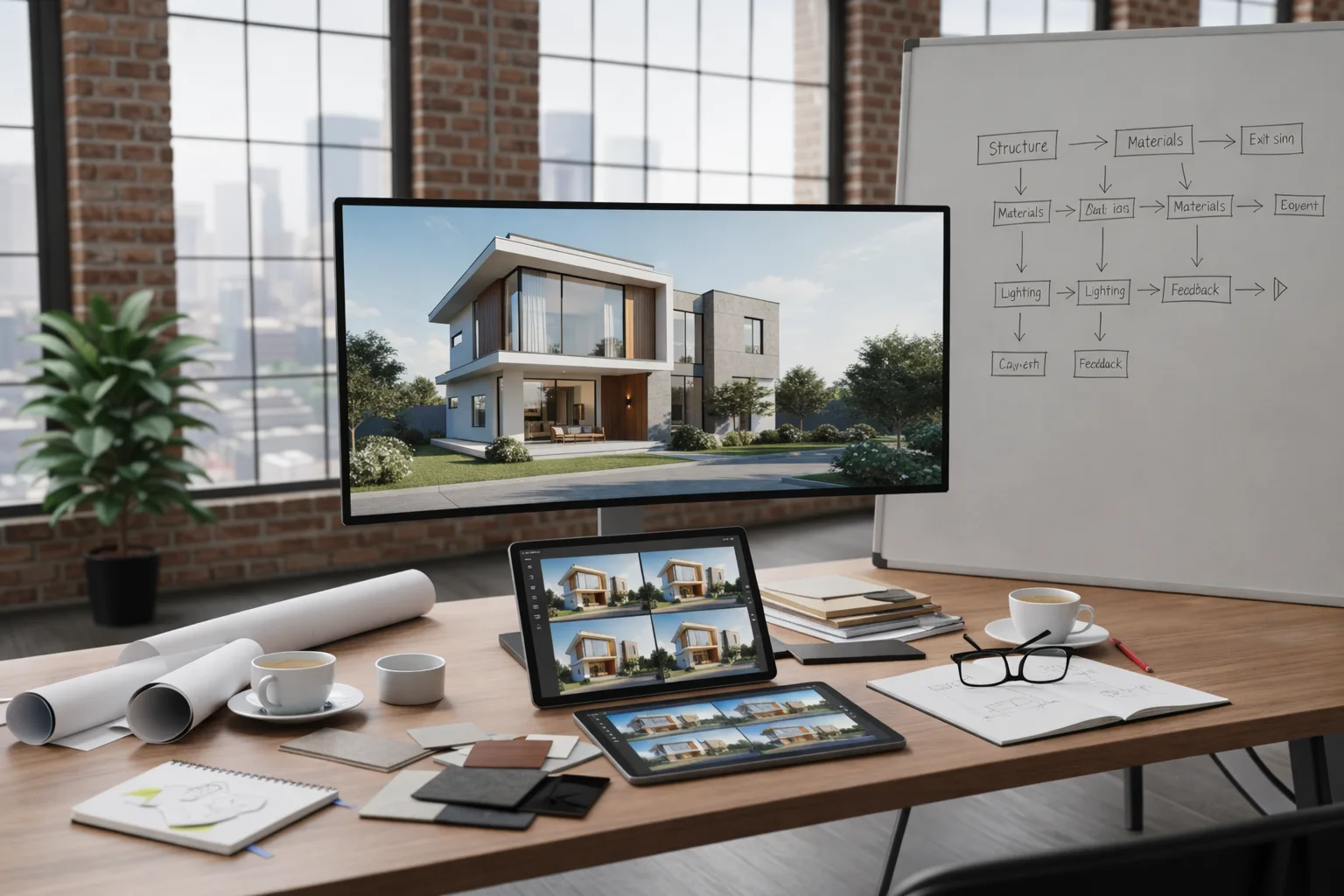
Clear communication is essential when working with 3D designers near me or remote visualization teams. Instead of sending long or unstructured messages, it helps to group feedback into a few clear categories, such as materials, lighting, camera angles, and décor.
This structured approach reduces guesswork and allows the visualization team to implement changes more efficiently. Screenshots with brief notes or arrows can further improve clarity and speed up the revision cycle.
You can also link to trusted external references, such as material suppliers or lighting inspiration articles. For example, resources like ArchDaily or Dezeen provide valuable visual references.
Timelines, File Formats, and Color Accuracy
Revisions vary in complexity. Minor adjustments may take hours, while major changes can require full re-rendering. Understanding this helps manage expectations when working on 3D architectural rendering projects.
Color accuracy is another important factor. Screen calibration differs across devices, so exact shades may appear slightly different. For brand-sensitive projects, providing color codes ensures consistency.
For web-focused projects, especially those involving WordPress development, studios may optimize brightness and contrast so images display well across devices.
Conclusion
Understanding render revisions transforms the client experience from uncertain to confident. When you know what to expect from 3D architectural rendering, you can provide better feedback and achieve stronger results.
Whether you collaborate with an architecture studio, rely on architectural visualization 3D, or search for 3D designers near me, clear communication and realistic expectations lead to success.
Render revisions are not obstacles—they are the bridge between imagination and reality. When clients and visualization teams work together with clarity and trust, the final visuals truly bring the design to life.