
How 3D Visualization Helps Homeowners Visualize Living Room Spaces
Introduction
Designing a living room is often more challenging than people expect. Homeowners usually have ideas in mind, but turning those ideas into a space that actually feels right can be difficult. Floor plans, measurements, and inspiration photos help to some extent, yet they don’t always show how a room will look once furniture, colors, and lighting come together.
This is where 3D visualization plays an important role. Instead of relying on imagination alone, homeowners can see a realistic version of their living room before making changes. This makes the planning process clearer, reduces uncertainty, and helps people feel more confident about their design choices.
What Is 3D Visualization?
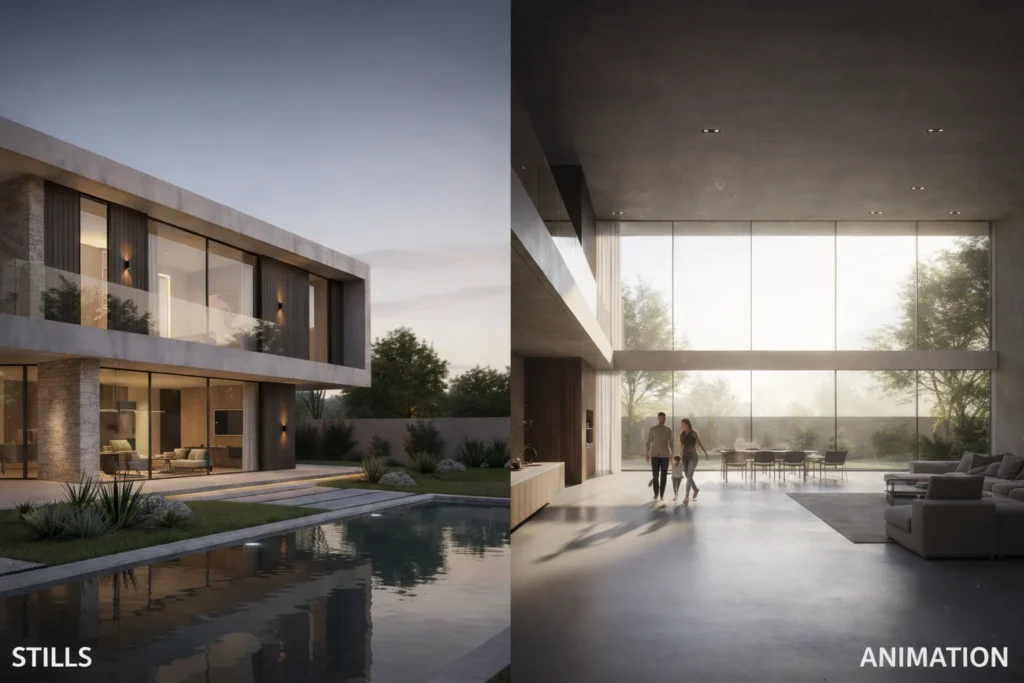
3D visualization is a digital method used to create realistic images of a space. Unlike flat drawings, it shows a living room with depth, scale, and detail. Walls, furniture, lighting, and decor are displayed in a way that feels close to real life.
For homeowners, this means being able to view their living room from different angles. They can see how tall furniture looks against walls, how much space remains for movement, and how different elements work together visually. This level of clarity is hard to achieve with traditional design tools.
How It Works in Home Design
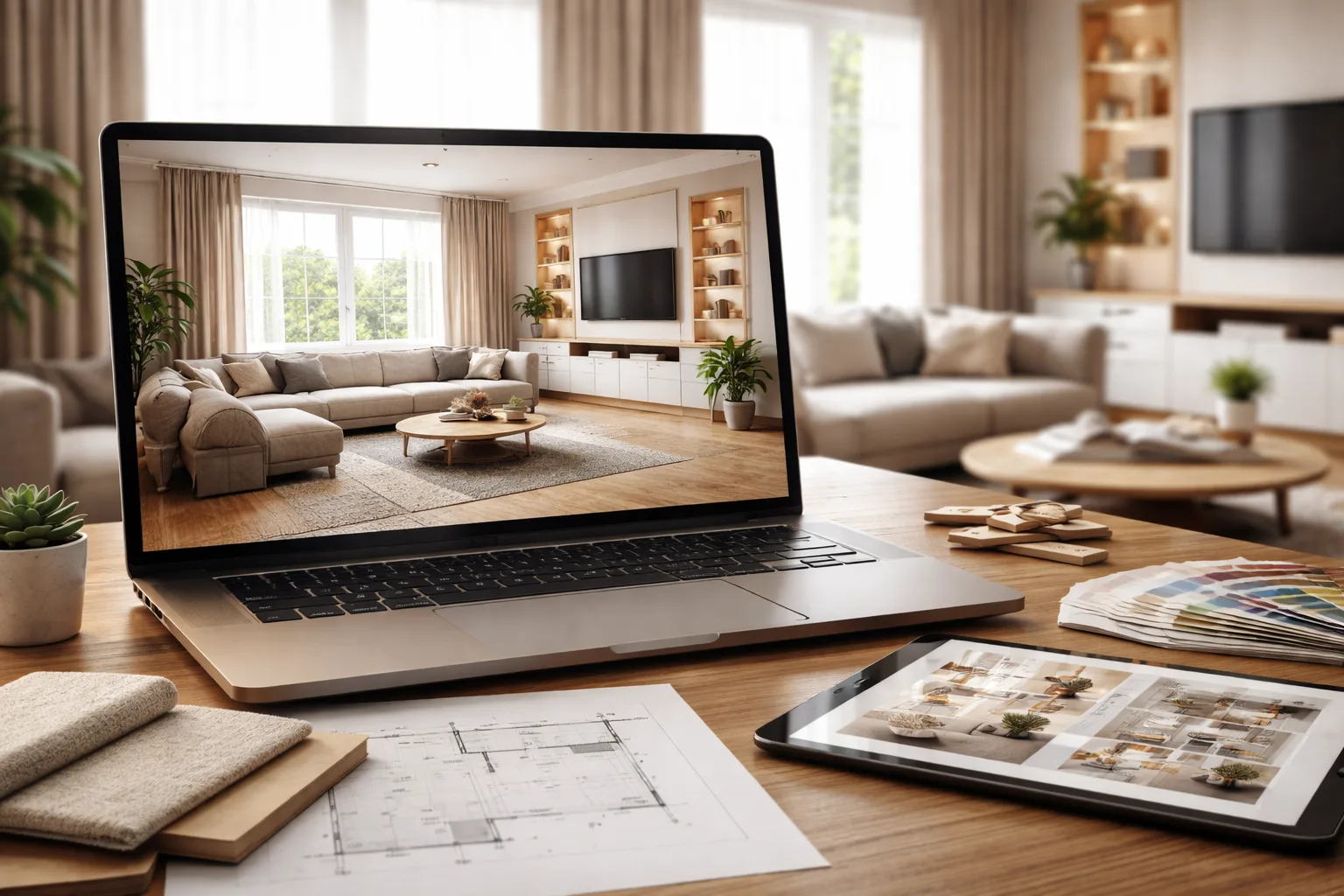
The process usually starts with basic room measurements. These measurements are used to build a digital model of the living room. Once the structure is in place, furniture, flooring, wall colors, and lighting are added.
Homeowners can then explore different versions of the same room. They might change the sofa style, try a different wall color, or adjust lighting placement. Because everything happens digitally, changes can be made quickly without any physical effort.
Why Seeing Your Living Room in 3D Makes a Difference
Many homeowners find it difficult to imagine space accurately. A room may look spacious on paper but feel crowded in real life. A 3D view removes this guesswork by showing the space as it would actually appear.
Being able to see the living room before making decisions helps homeowners understand scale and proportion. It becomes easier to tell whether furniture fits comfortably or whether the room needs a different layout. This visual clarity often leads to better decisions and fewer regrets.
Better Sense of Space and Layout
Understanding space is one of the biggest challenges in living room design. Furniture placement affects how people move through the room and how comfortable it feels.
With 3D visualization, homeowners can clearly see:
- How furniture fits within the room
- Whether walking paths feel open or tight
- How seating areas are arranged
Instead of guessing, they can adjust the layout until it feels balanced and practical.
Trying Furniture and Decor Without Buying
Furniture shopping can be stressful, especially when returns are difficult or costly. A sofa that looks perfect in a store may feel too large or out of place once it’s brought home.
3D visualization allows homeowners to test furniture digitally. They can see how different styles, sizes, and shapes look in their living room before making a purchase. This reduces the risk of buying items that don’t work well in the space.
Seeing Colors, Textures, and Lighting Clearly
Colors and textures can look very different depending on lighting conditions. A paint shade that looks warm during the day may appear dull at night. Flooring and fabric textures can also change based on light direction and intensity.
Using a 3D view, homeowners can preview how colors and materials interact in their living room. They can see how natural light enters the space and how artificial lighting affects the overall mood.
Comparing 3D Views With Traditional 2D Plans
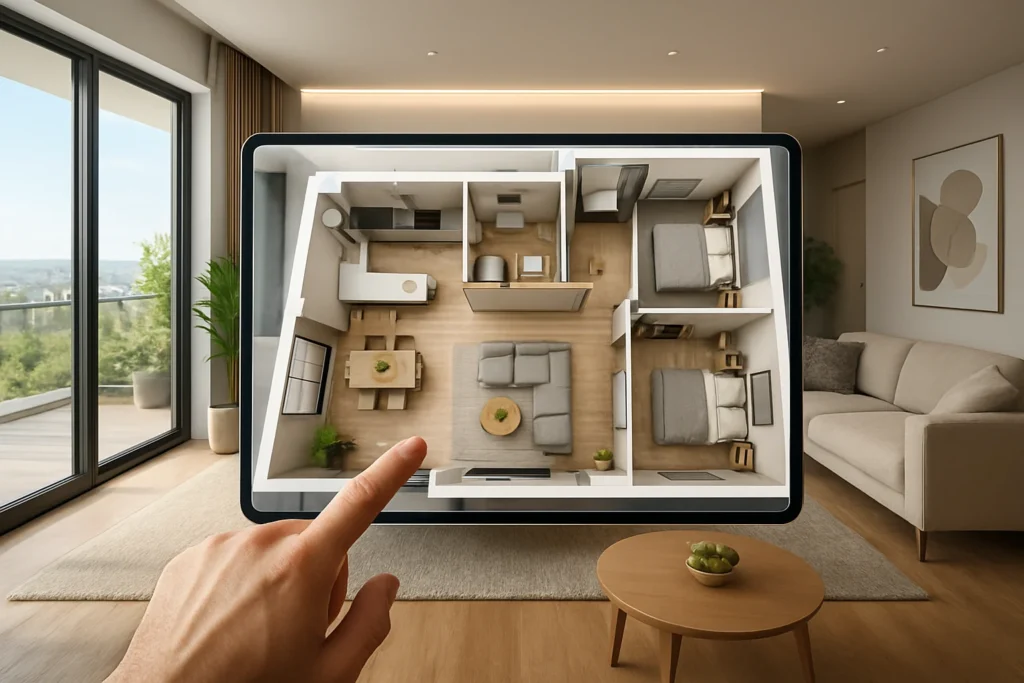
Traditional 2D plans are helpful for understanding room size and structure, but they often feel confusing to homeowners without design experience. These plans show layouts from a top-down view and lack depth.
A 3D view adds realism by showing height, perspective, and proportions. Homeowners can immediately understand how elements relate to one another, making it easier to make confident design decisions.
How Homeowners Use 3D Visualization for Living Rooms
Homeowners use this visual approach in many practical ways. Some use it to plan a complete living room makeover, while others use it for small updates like new furniture or paint.
Common uses include planning seating arrangements, testing wall colors, and checking how lighting fixtures affect the room.
Planning Furniture Arrangement
Arranging furniture is often one of the hardest parts of designing a living room. With 3D visualization, homeowners can move furniture pieces around until they find a layout that works comfortably.
Testing Wall Colors and Flooring
Seeing wall colors and flooring in a digital model helps homeowners feel more confident before making final decisions. Different options can be compared side by side.
Checking Lighting Effects Throughout the Day
3D visualization allows homeowners to preview how lighting behaves during the day and evening, helping them choose lighting that works well at all times.
Tools and Methods Homeowners Can Use
There are many tools available for homeowners interested in 3D visualization. Some are beginner-friendly apps, while others offer professional-level detail.
Homeowners can choose tools based on ease of use, accuracy, and budget.
Tips for Better Visualization Results
Accurate measurements are essential for realistic results. Using real photos of the living room can also improve the quality of the visualization.
Starting with a simple layout and gradually adding details helps keep the process manageable.
Common Misconceptions About 3D Visualization
Some homeowners believe 3D visualization is only for large homes or expensive projects. In reality, it works well for small living rooms and simple updates.
Others think it requires technical skills, but many tools are designed to be easy for beginners.
Cost Considerations for Homeowners
Costs vary depending on the tool or service used. While professional services may charge more, the cost is often lower than fixing design mistakes later.
Real Experiences From Homeowners
Homeowners who use 3D visualization often feel more confident and satisfied with their living room designs. Seeing the space beforehand helps avoid mistakes and makes the process smoother.
Conclusion
Planning a living room doesn’t have to involve uncertainty. With 3D visualization, homeowners can clearly see how layouts, furniture, colors, and lighting will come together before making changes.
This leads to better decisions, fewer mistakes, and living rooms that feel comfortable and well thought out. For homeowners seeking clarity and confidence, 3D visualization has become an essential part of modern home planning.