
Difference Between Traditional Drawings and 3D Visualization
Introduction
3D Visualization has changed the way people understand design ideas, especially in architecture, interior design, construction, and real estate. Before any project is built, it needs to be explained clearly to many people—clients, builders, engineers, and designers. The better the explanation, the fewer mistakes happen later.
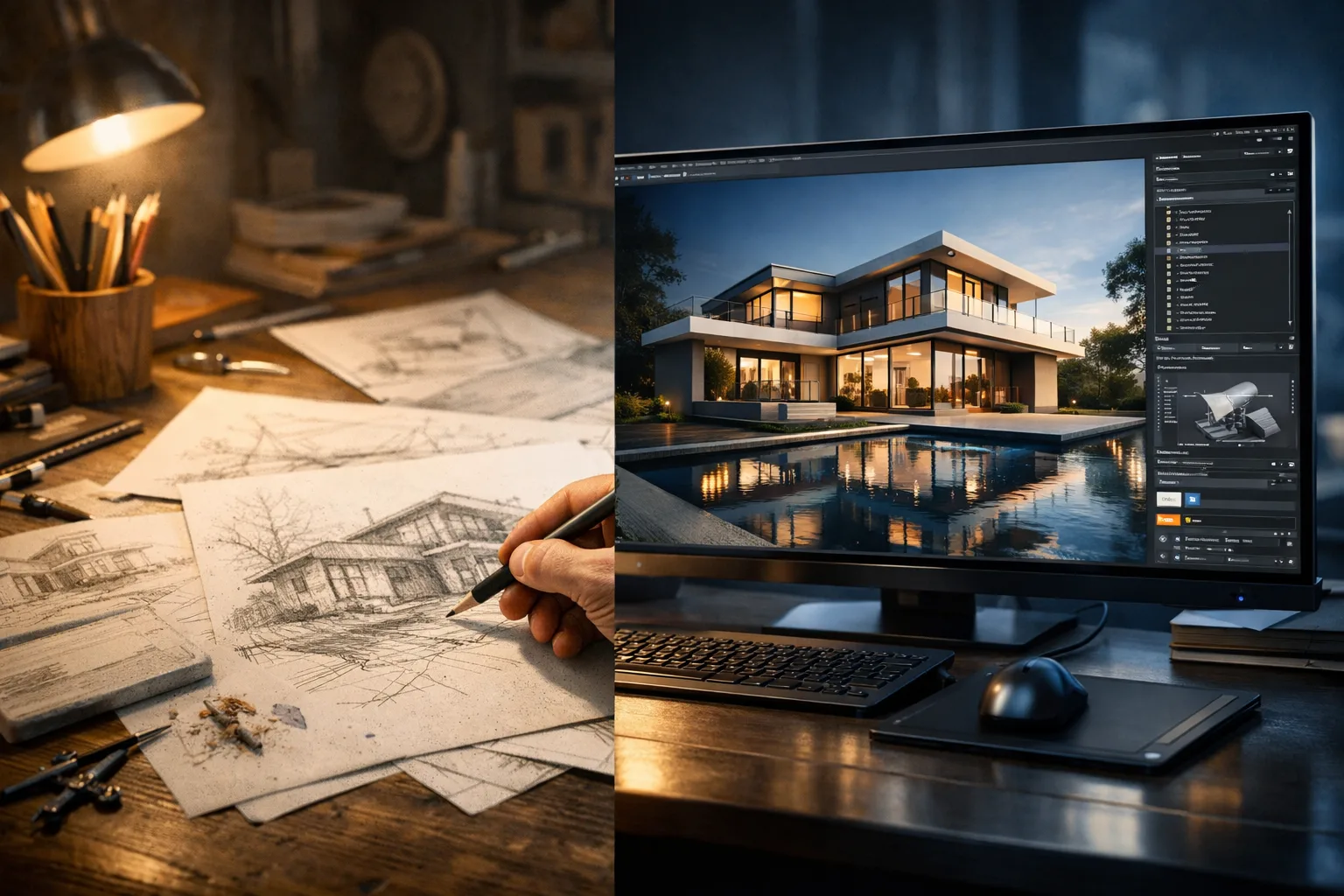
For many years, traditional drawings were the main way to present design ideas. They focused on measurements, structure, and technical details. Today, digital visuals allow people to see realistic images of spaces before construction begins. Both methods are still widely used, but they serve different purposes.
This blog explains the difference between traditional drawings and modern visual methods in a simple and honest way. By the end, you will understand how each approach works, where it is useful, and how they can work together in real projects.
Understanding Visual Representation in Design
Visual representation means showing an idea in a way that others can understand. In design-related fields, ideas are often complex and cannot be explained with words alone. Visuals help turn thoughts into something visible.
When a designer presents a project, they must explain layout, size, materials, lighting, and how spaces connect. If this information is unclear, confusion can happen. A client may imagine something different, or a builder may misread instructions.
Both traditional drawings and digital visuals are tools used to avoid these problems. They simply approach the task in different ways.
What Are Traditional Drawings?
Traditional drawings are two-dimensional drawings used to explain the technical side of a design. They are usually created by hand or with drafting software and are drawn to scale.
These drawings focus on structure, measurements, and layout. They are not meant to look realistic. Instead, they provide exact information needed to build a project correctly.
Traditional drawings are a standard part of architecture and construction and are often required for permits and approvals.
Types of Traditional Drawings
Traditional drawings come in several forms, each serving a specific role in the design and construction process.
Floor Plans
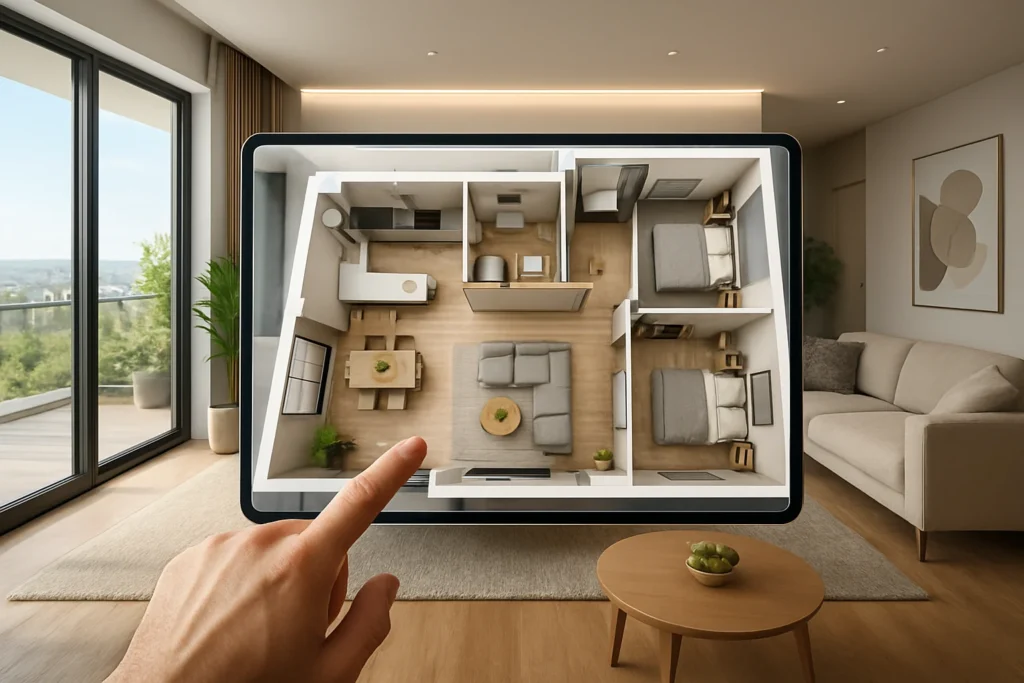
Floor plans show a top-down view of a building or space. They display room sizes, walls, doors, windows, and circulation paths. Floor plans help understand layout and flow.
Elevations
Elevations show the exterior or interior walls from a straight-on view. They explain height, proportions, and overall design style.
Sections
Sections cut through a building vertically or horizontally. They show internal details such as ceiling height, wall thickness, and structural layers.
Construction Drawings
Construction drawings include detailed notes, dimensions, and material information. Builders rely on these drawings during construction.
Strengths of Traditional Drawings
Traditional drawings remain important because they offer several key benefits.
Strong technical accuracy ensures builders can follow exact measurements and specifications without confusion.
These drawings are widely accepted across the industry. Architects, engineers, contractors, and authorities are trained to read and understand them.
They are essential for permits, approvals, and actual construction work.
Limitations of Traditional Drawings
Despite their importance, traditional drawings have limitations.
People without design training often find two-dimensional drawings difficult to understand. Imagining depth, height, and spatial relationships can be challenging.
They do not clearly show lighting, textures, colors, or materials, making it hard to visualize the final appearance.
Design changes can be time-consuming because multiple drawings may need to be updated.
What Is 3D Visualization?
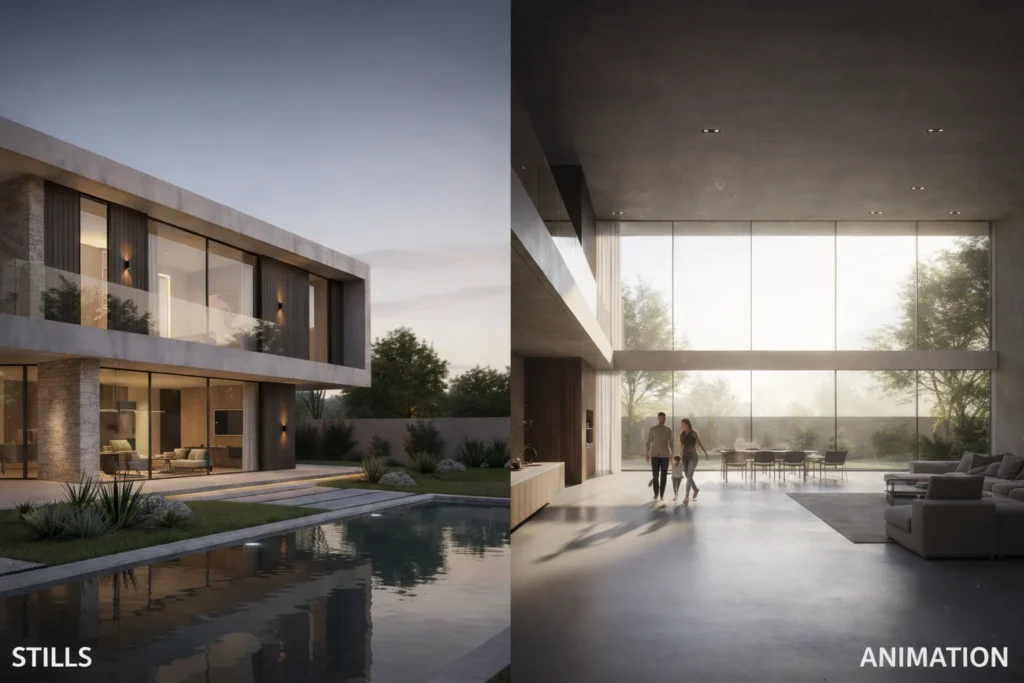
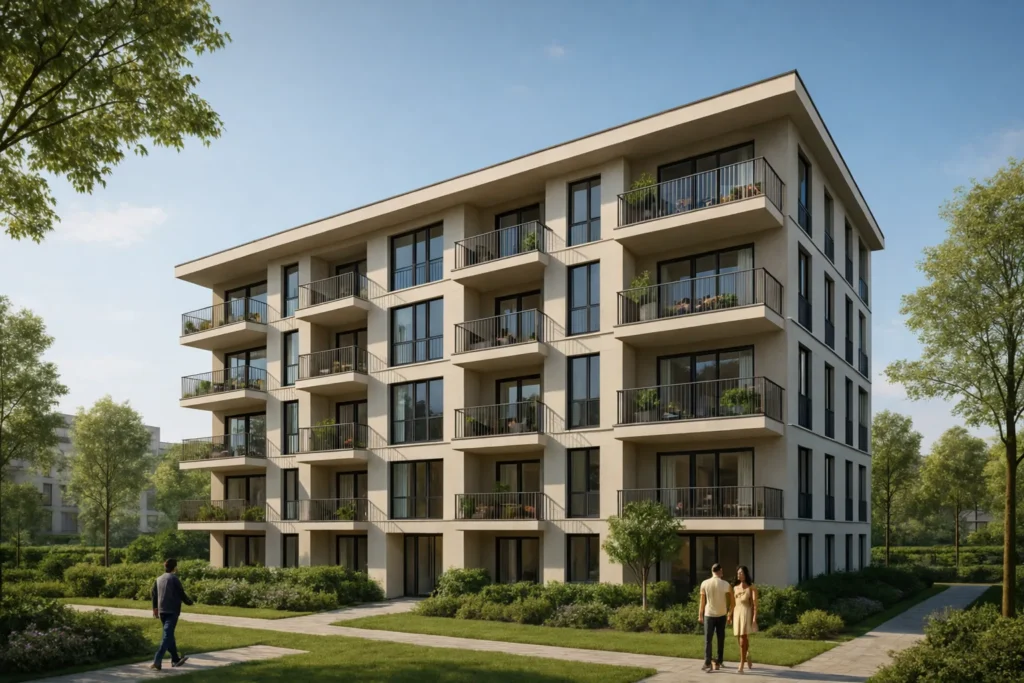
3D Visualization is a digital process that creates realistic images of a design before it is built. These visuals show depth, scale, materials, lighting, and shadows.
Instead of interpreting technical drawings, viewers see lifelike images that closely represent the final result. This makes the design easier to understand for everyone involved.
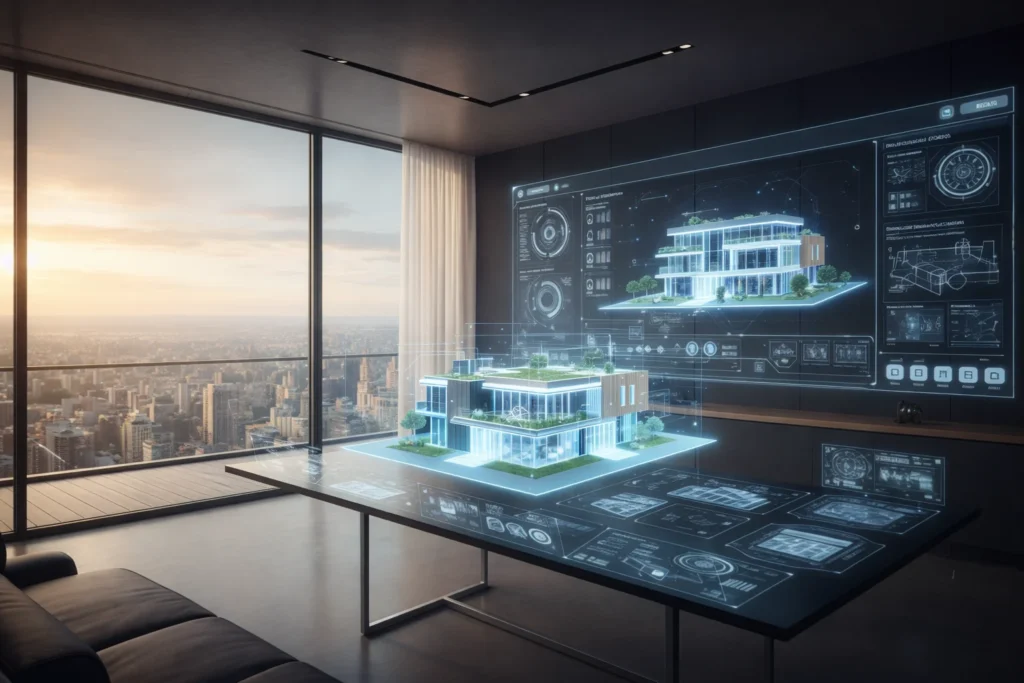
Designers use specialized software to build 3D models and generate rendered images.
How 3D Visualization Works in Real Projects
The process usually begins with basic design information such as floor plans or sketches. A digital model is created based on this data.
Materials like wood, concrete, glass, or fabric are applied to the model. Lighting is added to simulate real-world conditions.
Camera angles are selected, and final rendered images are produced. These images closely resemble photographs.
Benefits of Using 3D Visualization
One major benefit is clarity. Even clients with no technical background can understand the design immediately.
Realistic lighting, textures, and shadows help people imagine how the space will look and feel.
Communication improves because everyone discusses the same visual reference.
Design issues can be identified early, reducing costly mistakes during construction.
Traditional Drawings vs Modern Visual Methods
Traditional drawings focus on how something should be built, while digital visuals focus on how it will look.
Clients generally find realistic images easier to understand than technical drawings.
Both methods serve different purposes and are most effective when used together.
Cost and Time Comparison
Traditional drawings usually involve lower software costs and are required for permits, but design changes can take longer.
Digital visuals require higher skill and software investment but often lead to faster approvals and fewer misunderstandings.
Although digital visuals may cost more initially, they often save time and money later.
Which Option Is Better for Different Users?
Architects and designers use both methods—technical drawings for execution and 3D Visualization for presentation.
Real estate developers rely heavily on visuals to showcase projects before construction begins.
Homeowners benefit from realistic previews that reduce uncertainty and improve confidence.
Can Traditional Drawings and 3D Visualization Work Together?
Yes, and in most projects, they do.
Traditional drawings guide construction and approvals, while 3D Visualization supports understanding and communication.
Together, they create a smoother and more efficient design process.
Common Myths About 3D Visualization
Some believe it is only for large projects, but small homes and renovations also benefit.
Others think it replaces technical drawings, but it actually supports them.
Many assume it is only for marketing, while in reality it is useful for planning and decision-making.
Future of Design Presentation
Clients increasingly expect clear previews before construction begins.
Animated walkthroughs and virtual tours are becoming common, allowing people to experience spaces before they exist.
Design presentation continues to evolve with technology.
Conclusion
Traditional drawings and 3D Visualization both play important roles in modern design. One explains how something is built, while the other shows how it will look and feel.
Choosing the right approach depends on the project and the audience. In many cases, using both together leads to clearer communication and better results.