
Why 3D Visualization Is the Future of Architecture
Introduction
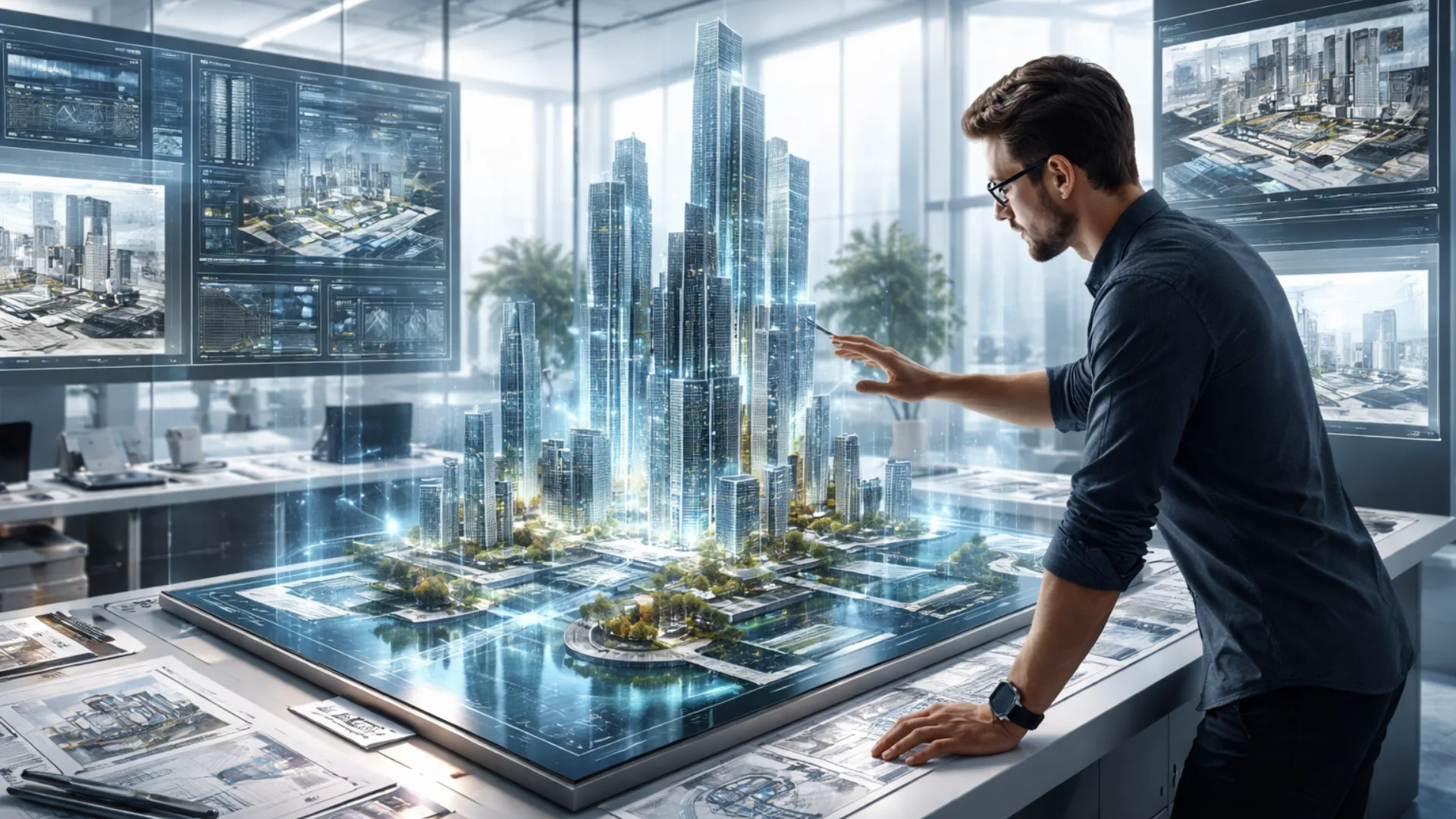
3d visualization has become an indispensable tool in modern architecture, redefining the way architects, designers, and clients perceive and interact with design concepts. In the past, architectural communication relied heavily on hand-drawn sketches, 2D plans, and physical models. While these traditional methods conveyed basic ideas, they often left room for misunderstanding and interpretation, making it difficult for clients to fully grasp spatial relationships, proportions, or material finishes. With the advent of 3d visualization, these limitations have been addressed, enabling architects to create highly realistic, immersive, and interactive representations of spaces that were once only possible in imagination. This technological advancement allows clients to experience projects virtually, gaining a complete understanding of design intent long before the construction phase begins, making collaboration smoother and decisions more confident.
Evolution from Sketches to Digital Models
The evolution of architectural visualization reflects a fascinating journey from simple drawings to sophisticated digital modeling. Early architecture relied on pencil sketches and scaled models to communicate ideas. While these methods had a personal and artistic touch, they were static, time-consuming, and lacked depth. With the introduction of computer-aided design, architects were able to create precise technical drawings, significantly improving accuracy and efficiency. Programs like AutoCAD revolutionized drafting, yet 2D plans could not fully communicate the look, feel, or ambiance of a space. The emergence of three-dimensional modeling software transformed this scenario, laying the foundation for modern 3d visualization. Tools such as SketchUp, 3ds Max, Revit, and Rhino allow architects to construct detailed digital models that accurately reflect dimensions, materials, and spatial relationships. This capability makes it easier for clients to visualize the final result, enabling informed decisions and reducing the risk of costly misunderstandings.
Photorealistic Rendering Brings Designs to Life
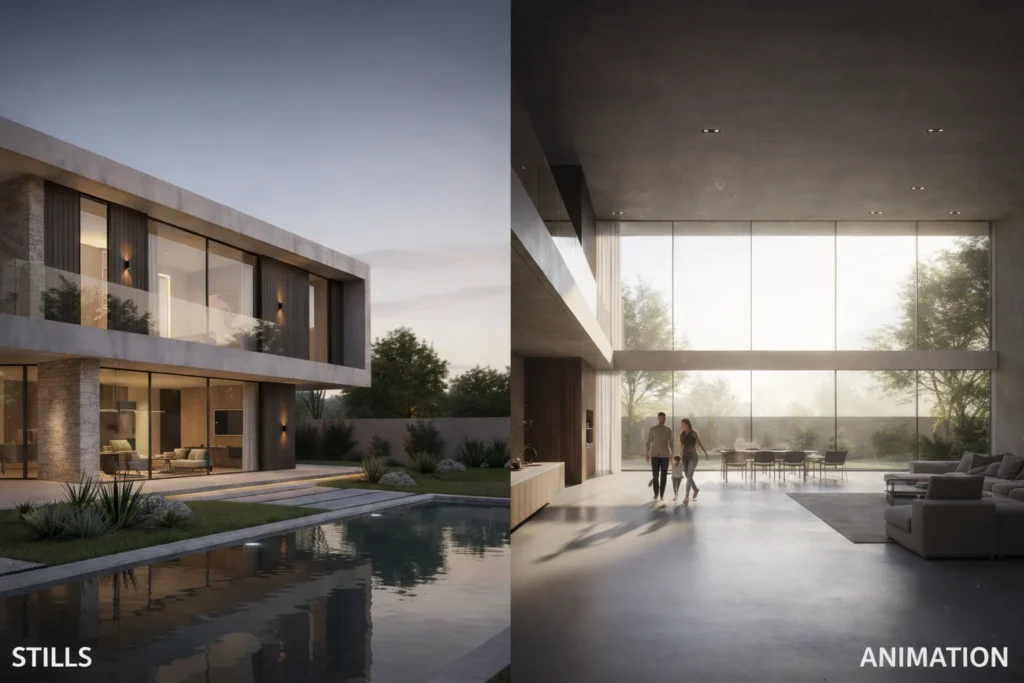
Beyond basic 3D modeling, rendering engines have added a new level of sophistication to architectural presentations. Rendering engines convert digital models into photorealistic images by simulating real-world lighting, shadows, textures, and reflections. Techniques like ray tracing and global illumination allow surfaces such as wood, stone, glass, and metal to appear lifelike. This realism helps clients understand how natural light will affect interiors at different times of the day, how textures interact with space, and how materials behave in combination. By providing these realistic visuals, 3d visualization enhances communication, instills client confidence, and enables architects to refine designs digitally before committing to construction, reducing errors and rework while saving time and costs.
Immersive Experiences with Virtual and Augmented Reality
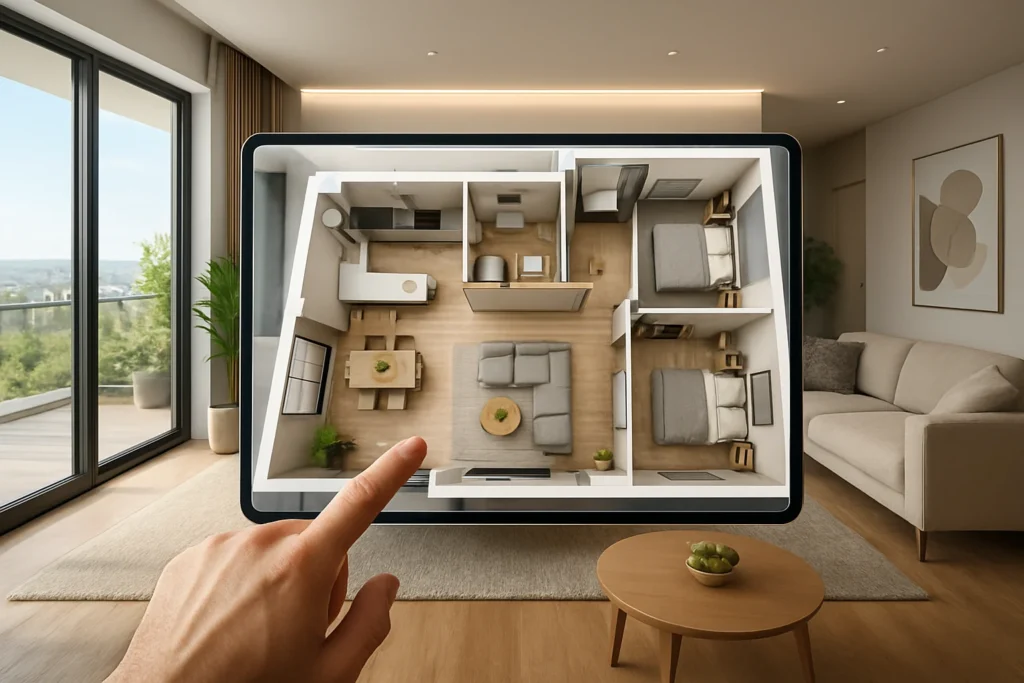
Immersive technologies have further strengthened the impact of 3d visualization. Virtual reality (VR) allows clients to step inside a digital replica of the project, experiencing scale, proportions, and circulation in a realistic environment. Clients can navigate spaces, assess room layouts, and understand spatial relationships in a way that traditional drawings cannot convey. Augmented reality (AR) complements this by overlaying digital models onto real-world environments, allowing clients to see how proposed designs integrate into existing spaces. With AR, a smartphone or tablet can project furniture, finishes, or structural changes into a real environment, enabling instant feedback and informed decision-making. These immersive technologies ensure that all stakeholders, regardless of technical knowledge, can fully comprehend and engage with the design process, leading to more collaborative and satisfying project outcomes.
AI-Assisted Design Enhances Efficiency
Artificial intelligence has begun to play a transformative role in 3d visualization workflows. AI tools can automate repetitive tasks, optimize rendering processes, and generate realistic textures and lighting setups. For example, AI can suggest suitable materials based on design context, enhance image resolution, or predict lighting behavior in complex spaces. While AI does not replace human creativity, it enhances the efficiency of architectural workflows, allowing architects to focus on design innovation rather than technical adjustments. Integrating AI with 3d visualization enables designers to explore multiple design iterations quickly, test new ideas, and produce high-quality visuals that communicate design intent with clarity and impact.
Real-Time Rendering for Faster Collaboration
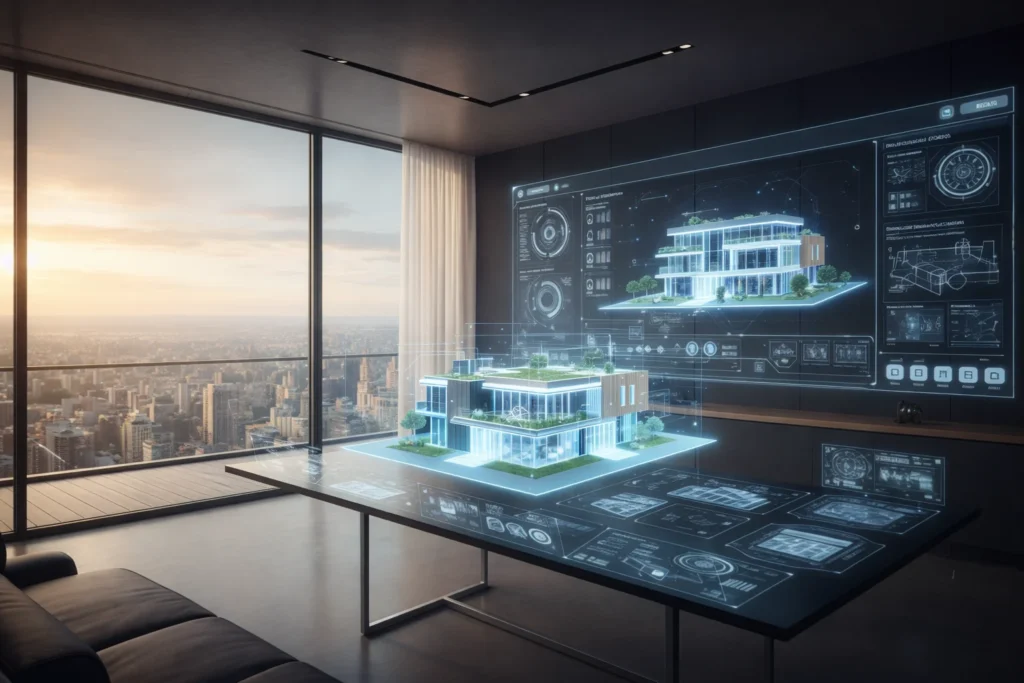
Real-time rendering has emerged as another game-changer in architectural visualization. Unlike traditional workflows, where updating visuals could take hours or days, real-time rendering allows immediate adjustments to materials, lighting, furniture, and spatial arrangements. Clients and designers can instantly see the effects of changes, enabling faster collaboration, feedback, and decision-making. This capability is particularly valuable during client presentations, where interactive exploration of spaces can clarify complex design ideas and accelerate approval processes. Real-time 3d visualization empowers architects to iterate quickly, improving project efficiency while maintaining a high level of visual quality.
Cloud-Based Collaboration for Seamless Access
Cloud technology further amplifies the advantages of 3d visualization by facilitating seamless collaboration across teams and locations. Cloud-based platforms allow architects, clients, contractors, and consultants to access models and renders from anywhere, share feedback, and ensure everyone is working with the latest project information. This level of accessibility reduces errors, improves communication, and maintains transparency throughout the project lifecycle. For large projects or multi-location teams, cloud collaboration makes it possible to manage complex workflows efficiently while keeping stakeholders aligned with design intent. Combining cloud technology with 3d visualization creates a powerful ecosystem for real-time, coordinated, and effective project management. Learn more about cloud collaboration tools at Autodesk BIM solutions.
Animations and Interactive Walkthroughs
Modern 3d visualization extends beyond static images to include animations, walkthroughs, and interactive experiences. Animated walkthroughs allow clients to virtually tour a building, understanding circulation, flow, and spatial hierarchy dynamically. Interactive models enable users to explore spaces at their own pace, experiment with materials, and test lighting variations, providing a hands-on understanding of the design. These immersive experiences are not only visually engaging but also highly informative, bridging the gap between abstract plans and tangible environments. By enabling clients to experience designs interactively, 3d visualization improves engagement, builds trust, and reduces miscommunication, ensuring smoother project execution.
Practical Benefits for Architects and Clients
The practical benefits of 3d visualization for architects are as significant as those for clients. Beyond communication, these visual tools support creative problem-solving and iterative design. Architects can identify spatial conflicts, adjust proportions, and evaluate material choices virtually, minimizing errors before construction begins. This reduces waste, saves costs, and allows designers to experiment freely without real-world consequences. Additionally, 3d visualization supports sustainable design practices by allowing architects to test lighting, energy efficiency, and material performance in virtual environments. The combination of accuracy, efficiency, and creativity makes 3d visualization an essential part of contemporary architecture.
Overcoming Challenges and Barriers
Despite its many advantages, 3d visualization is not without challenges. Advanced software requires specialized skills, and high-quality rendering often demands powerful computers and substantial processing power. Smaller firms or independent designers may face constraints due to hardware costs or limited technical expertise. Moreover, some clients may initially hesitate to embrace fully digital representations, preferring traditional drawings or models. However, the increasing accessibility of user-friendly software, cloud-based tools, and real-time rendering platforms is steadily lowering these barriers, making 3d visualization attainable for a wide range of professionals.
The Future of Architectural Visualization
The future of 3d visualization in architecture is bright and evolving. As technologies such as real-time rendering, AI-assisted workflows, and immersive VR and AR experiences continue to advance, the capabilities of digital visualization will expand further. Clients can expect even more interactive, lifelike, and intuitive ways to explore and engage with designs. Architects will have the ability to iterate faster, experiment creatively, and present more compelling project proposals. Beyond architecture, 3d visualization is also influencing interior design, urban planning, landscape architecture, and real estate marketing, highlighting its versatility and long-term value across multiple domains. As the technology becomes more integral to the design process, 3d visualization will continue to shape the way buildings are conceptualized, communicated, and executed.
3D Visualization in Real Estate and Marketing
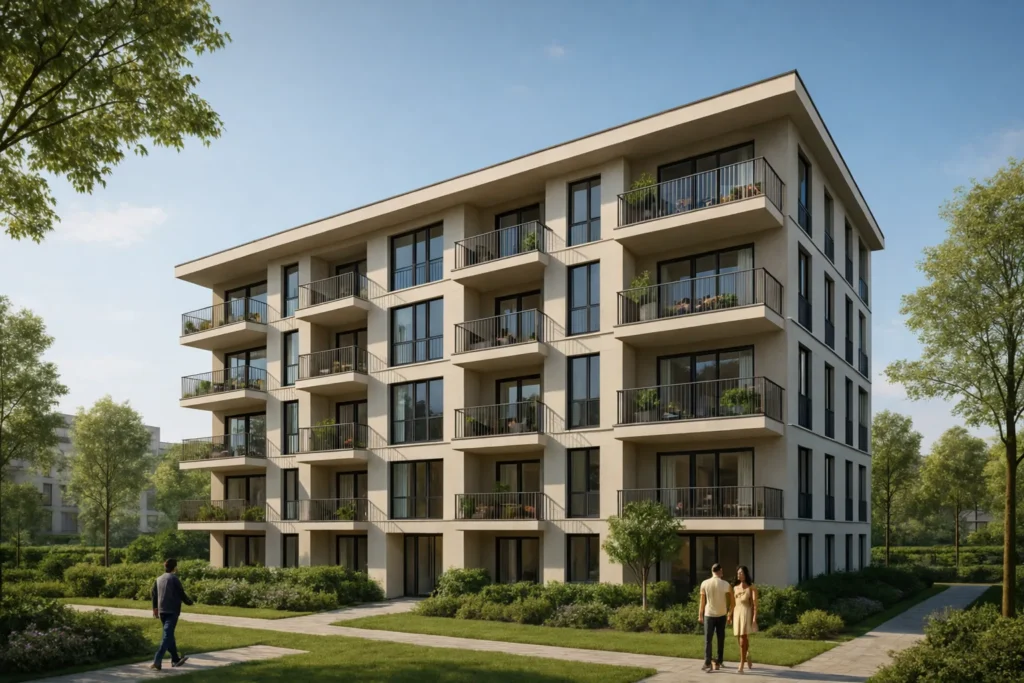
In real estate and development, 3d visualization has transformed marketing strategies. Prospective buyers or tenants can explore properties virtually, assessing layouts, materials, and finishes before visiting the site. This level of engagement increases confidence, accelerates decision-making, and improves overall client satisfaction. Interactive virtual tours, realistic renderings, and immersive experiences make it easier to showcase properties, communicate design intent, and highlight unique selling points. Developers and architects alike benefit from these tools, which reduce marketing costs while creating compelling, persuasive visuals that appeal to clients and stakeholders alike.
Conclusion: Why 3d Visualization Is the Future
In conclusion, 3d visualization has fundamentally reshaped modern architecture by bridging the gap between imagination and reality. By combining 3D modeling, photorealistic rendering, immersive VR and AR experiences, and AI-assisted tools, architects can communicate ideas with unparalleled clarity, clients can make informed and confident decisions, and projects can progress efficiently with fewer errors. This technology has become central to contemporary architectural practice, transforming how buildings are conceptualized, experienced, and marketed. As digital tools continue to evolve, the impact of 3d visualization will only grow, ensuring that architecture is more interactive, engaging, and visually compelling than ever before, truly shaping the future of design.